Stop Wasting Your One Bio Link: How To Turn TikTok And Instagram Traffic Into Source‑Aware Smart Links
You know the setup. You spend time making a TikTok, polishing an Instagram post, maybe sending a newsletter too, and every one of those people gets dumped onto the exact same link-in-bio page. It feels organized. It looks professional. But it also asks every visitor to do extra work. A TikTok viewer who clicked on impulse does not want to hunt through six buttons. An Instagram follower who wants proof and details needs more context. A newsletter reader is often ready for the next step right now. Sending all of them to one generic menu wastes clicks you already worked hard to earn. The fix is simpler than it sounds. Use one clean bio URL, but route people differently based on where they came from. That is the idea behind smart link in bio routing for tiktok and instagram, and it can turn the same traffic into better signups, more sales, and clearer data.
⚡ In a Hurry? Key Takeaways
- One bio link works better when it redirects visitors by source, instead of showing everyone the same button-filled page.
- Send TikTok traffic to a fast, simple mobile page, Instagram traffic to proof-heavy content, and email readers to a deeper or purchase-ready page.
- Use first-party tracking and clear labels so you get better results without giving all your audience data to outside platforms.
Why the usual link-in-bio page underperforms
Most link-in-bio tools solve the wrong problem.
They assume the issue is a lack of space, so they give you more buttons. But your real problem is mismatch. Different visitors click for different reasons, in different moods, with different levels of intent.
TikTok traffic is usually fast and curious. Instagram traffic often wants reassurance, visuals, and social proof. Newsletter traffic tends to be warmer because those readers already know you.
Put all three groups on the same page and you create friction. Even a small delay can cost you. One extra choice. One extra scroll. One confusing label. Gone.
What a source-aware smart link actually does
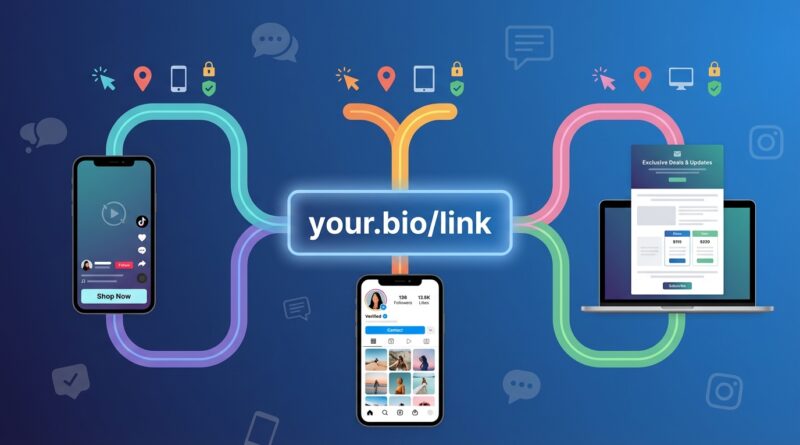
A source-aware smart link is one short, trustworthy URL that changes the destination based on context.
That context can include the referring app, campaign tags, device type, or the exact link version you shared. The visitor sees one clean link. Behind the scenes, the system makes a smart decision.
A simple example
Let’s say your bio link is yourbrand.com/go.
Here’s what could happen:
- TikTok click goes to a lightweight page with one clear offer, short copy, and a big mobile-friendly button.
- Instagram click goes to a page with testimonials, before-and-after images, FAQs, and a stronger brand story.
- Newsletter click goes to a product page, long-form guide, or checkout page because that audience is already warmer.
Same public link. Better match. Better odds of conversion.
Why smart link in bio routing for tiktok and instagram works
It works because it respects user intent.
People do not arrive as blank slates. A TikTok viewer often acts on impulse. They need speed. Instagram users are more likely to browse your profile, look at your vibe, and compare options. Email subscribers have already raised their hand once. They are often closer to buying or signing up.
When the landing experience matches that intent, fewer people bounce and more people act.
TikTok visitors need speed
TikTok is all momentum. If the click came from a short video, the landing page should be equally focused. Keep it fast. Keep it mobile-first. Give them one thing to do.
Instagram visitors need confidence
Instagram is more visual and more identity-driven. People often want proof, creator credibility, comments, reviews, or examples before they commit.
Email readers need the next step
If somebody opened your newsletter and clicked, they usually do not need a giant menu. They need the most relevant page for the topic you promised in the email.
How to set this up without making it complicated
You do not need a giant marketing stack to start.
1. Keep one primary bio link
Use one short URL that looks trustworthy and easy to remember. Ideally, use your own domain, not a random third-party shortener. That builds trust and gives you more control.
2. Create separate destination pages by audience type
You do not need dozens. Start with three:
- A TikTok page
- An Instagram page
- An email or newsletter page
Each page should fit how that audience behaves.
3. Route by referrer or campaign tags
If someone comes from TikTok, send them to the TikTok page. If they come from Instagram, send them to the Instagram page. If you share the same smart link in a newsletter, add campaign tags so that traffic gets sent to the right destination.
4. Measure outcomes, not just clicks
This part matters. A lot of creators celebrate click volume, then miss the fact that those clicks are not turning into signups, bookings, or sales.
Track what happens after the click. Which source leads to purchases? Which one leads to email opt-ins? Which one bounces in five seconds?
What each landing page should include
For TikTok
- Fast load time
- Short headline
- One main call to action
- Minimal text
- Big buttons
For Instagram
- Strong visuals
- Testimonials or reviews
- Proof of results
- Short FAQ section
- Clear next step
For newsletters
- A page that matches the email topic exactly
- More detail
- Pricing or purchase info if appropriate
- Less hand-holding, more direct action
Mistakes to avoid
Too many choices
If your page looks like a restaurant menu with 14 options, most people will not pick anything. Fewer choices usually win.
Sending every source to the homepage
Your homepage is not always the best landing page. It is often too broad for high-intent traffic.
Ignoring mobile performance
Most bio traffic comes from phones. If your page is heavy, cluttered, or awkward on mobile, you are losing people before they even read.
Relying only on platform analytics
TikTok and Instagram can tell you some things, but not the whole story. If you want to know which channel actually drives revenue, use your own tracking too.
Privacy and control matter too
There is another upside here that gets less attention. A source-aware setup can help you keep more control of your audience data.
When every click goes through a third-party platform and then into another third-party tool, you lose visibility. You also depend on their reporting rules, their limits, and sometimes their branding.
Using your own short domain, your own landing pages, and your own analytics gives you cleaner insight. It also means you are building an audience asset, not renting access to one.
Who should use this approach
This is not just for giant brands.
- Creators selling digital products
- Coaches booking discovery calls
- Local businesses running social promotions
- Independent shops pushing limited offers
- Newsletters trying to turn readers into customers
If you have more than one traffic source and those people behave differently, this setup is worth your time.
Start small, then improve
You do not need perfect routing on day one.
Start with one clean bio link and three destination pages. Watch what happens for a couple of weeks. Then adjust. Maybe TikTok visitors respond better to a discount. Maybe Instagram users need more reviews. Maybe email readers convert best on a direct checkout page.
The goal is not to build a fancy system. The goal is to stop wasting attention you already earned.
At a Glance: Comparison
| Feature/Aspect | Details | Verdict |
|---|---|---|
| Traditional link-in-bio page | One page with many buttons for every visitor, no matter where they clicked from. | Easy to set up, but often weak for conversions. |
| Source-aware smart routing | One public link sends TikTok, Instagram, and email traffic to different pages based on source or tags. | Best option if you want better relevance and stronger results. |
| Analytics and data control | Own-domain links and first-party tracking show which source leads to real actions, not just clicks. | More useful and more trustworthy than vanity metrics alone. |
Conclusion
You do not need more buttons in your bio. You need a better first step. Social platforms still give you one real clickable link, but TikTok, Instagram, and newsletters do not send the same kind of visitor. Treating them like they are identical leaves conversions on the table. A source-aware smart redirect fixes that without making your public profile messy. You keep one clean link, but behind it, TikTok visitors can land on a fast mobile-first offer, Instagram users can see proof and context, and newsletter readers can go straight to a deeper page or a purchase path. That means more value from the same content, a clearer view of which channel drives real results, and more control over your own data instead of handing it all to big ad platforms. Small change. Big difference.