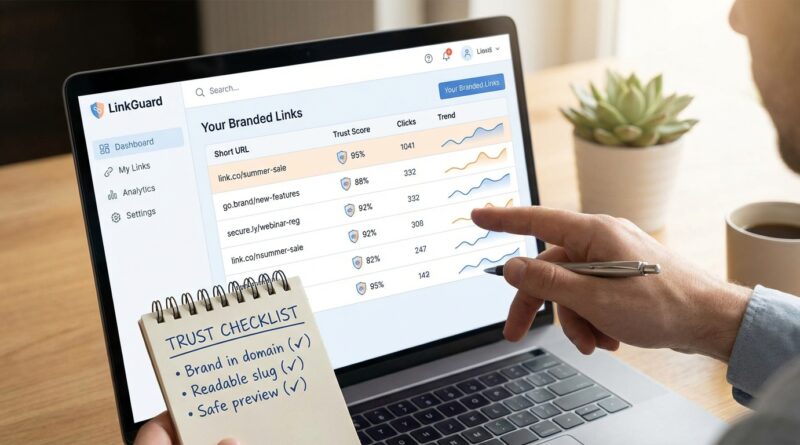
The best way to make your short links look trustworthy without killing your tracking data
You can do everything right in a campaign, then lose the click because the link looks shady. That is the part people miss. Users have been trained to hesitate when they see random short domains, weird strings of letters, or redirects that hide where they are going. And honestly, they are not wrong. The best answer to how to make short links trustworthy for users is simple. Use your own branded short domain, keep the slug readable, and move most of your tracking behind the scenes instead of stuffing every parameter into the visible URL. That gives people a link that feels familiar and safe, while still giving your team clean analytics, attribution, and A/B test data. If your links keep getting ignored, flagged, or treated like phishing bait, this is one of the fastest fixes you can make. It is not just about appearances. It is about trust, clicks, and revenue.
⚡ In a Hurry? Key Takeaways
- Use a branded short domain plus a clear, human-readable slug. That is the strongest trust signal.
- Keep visible tracking light. Put campaign data in your redirect platform or first-party analytics where possible.
- Trust matters as much as measurement. A link that gets fewer clicks or more spam flags is bad data, even if it tracks perfectly.
The real problem with short links
Most people do not inspect links like security pros. They make a snap judgment. Does this look familiar? Does it match the brand? Does it feel safe to tap on a phone?
That is why generic shorteners often hurt performance. A link like bit.ly/7xQp2m is technically fine, but it tells the user almost nothing. It asks for trust before offering any reason to trust it.
Browsers, email filters, ad platforms, and workplace security tools are also getting stricter. Opaque redirects and overloaded tracking URLs can trigger warnings, lower deliverability, or simply make users back out.
The best format: branded, readable, and lightly tagged
If you want the short version, here it is:
Use this pattern:
yourbrand.link/product-demo
or
go.yourbrand.com/spring-sale
That format works because it answers the user’s silent question right away. Who is sending me this, and where am I probably going?
What makes it trustworthy
A good short link usually has three things:
- A branded domain. Not a public shared shortener. Use your own domain or subdomain.
- A readable slug. “/pricing” beats “/aB39xQ” almost every time.
- A sensible redirect path. One redirect is fine. A chain of redirects starts to look messy and risky.
What makes it measurable
You do not need to give up analytics to make links cleaner. You just need to stop putting every last tracking detail in the visible URL.
Instead, track with:
- First-party analytics on your own site
- Server-side redirect logs
- A link management platform that stores metadata off the public URL
- UTM parameters only when they are truly needed
Why branded short domains beat public shorteners
Public shorteners have a reputation problem. You are sharing a domain with everyone else using that service, including spammers and scammers. If enough bad traffic comes through that domain, your perfectly normal campaign can get caught in the same suspicion net.
With a branded short domain, you control the reputation. You also create consistency across email, social, SMS, QR codes, and printed materials.
Good examples include:
- go.yourbrand.com
- links.yourbrand.com
- yourbrand.co
Try to make the domain easy to read out loud and easy to recognize on a tiny phone screen. Clever is fine. Clear is better.
Keep the slug readable. This matters more than most teams think.
People notice the part after the slash. A human-readable slug gives context and lowers anxiety.
Better choices:
- /book-demo
- /free-guide
- /pricing
- /summer-deal
Worse choices:
- /x7Q2Lm
- /offer-2025-final-v2-real
- /redirect?id=44921
You do not need every slug to be pretty. But if it is customer-facing, readable usually wins.
How to keep tracking without making links ugly
This is where marketers get nervous. They hear “clean link” and assume it means “less data.” It does not.
Use hidden campaign metadata when possible
Many link tools let you assign campaign name, source, audience, and test variant inside the dashboard instead of exposing it all in the URL. The user sees one clean link. You still see detailed reporting.
Use UTMs selectively, not by default
UTM parameters still have a place, especially for cross-platform attribution. But use the minimum needed. A short branded link that redirects to a landing page with five long tracking parameters can still look messy if the final destination gets exposed in previews or copy-pastes.
A lighter setup might use only:
- utm_source
- utm_medium
- utm_campaign
Skip the kitchen sink unless you truly need it.
Prefer first-party analytics
When possible, collect campaign and conversion data on your own domain, through your own analytics stack. That is often more durable as privacy rules change and third-party tracking gets weaker.
Pass A/B test data server-side
If you are testing versions of a page or audience splits, your redirect platform can often assign variants before the page loads. That keeps the public link clean and still lets you compare performance.
A simple trust-first setup for small businesses and creators
If you do not have a full growth team, do not overbuild this. Start with a simple system.
- Buy a short branded domain or create a branded subdomain.
- Route it through a reputable redirect service or your own server.
- Create plain-English slugs for customer-facing campaigns.
- Add only the essential tracking fields.
- Check each link in email, mobile, social previews, and security scanners before launch.
That alone will put you ahead of a lot of campaigns that still look like mystery links.
Common mistakes that quietly kill trust
Using a shared short domain
It is quick, but you inherit the baggage of every bad actor on that domain.
Changing domains too often
Consistency builds recognition. If your links come from three different short domains in one month, users notice.
Making every slug auto-generated
That saves a few seconds internally and costs confidence externally.
Stacking redirects
Shortener to tracker to geo-router to affiliate hop to landing page. That is the kind of chain filters dislike and users do not trust.
Hiding the destination too aggressively
Sometimes teams think mystery improves click-throughs. Usually the opposite happens. A little clarity helps.
What to test if you want proof
If you want to settle this with data, run a basic A/B test.
Test Version A:
- Generic shortener
- Random slug
- Heavy visible tracking
Test Version B:
- Branded short domain
- Readable slug
- Minimal visible parameters
Watch:
- Click-through rate
- Spam complaint rate
- Email deliverability
- Ad approval issues
- Conversion rate after click
The key is not just raw clicks. It is quality clicks from users who felt comfortable moving forward.
At a Glance: Comparison
| Feature/Aspect | Details | Verdict |
|---|---|---|
| Domain choice | Branded domain or subdomain looks familiar and builds reputation over time. Shared public shorteners are faster to set up but carry more risk. | Branded wins for trust and long-term performance. |
| Tracking method | Visible UTMs are useful, but too many make links messy. Hidden metadata, first-party analytics, and server-side tracking keep links cleaner. | Use light visible tracking and keep the rest behind the scenes. |
| Slug style | Readable slugs like /pricing or /ebook give context. Random strings feel opaque and are easier to mistrust. | Readable slugs are the safer bet for users and results. |
Conclusion
The best short link is not the shortest one. It is the one people feel safe clicking. That is the shift more teams need to make. Platforms, browsers, and security tools are tightening up around opaque redirects and bloated tracking, and lazy link shortening is starting to cost real money. A trust-first format, branded domain, readable slug, and lighter visible tracking, lets you keep the data that matters without making every campaign look suspicious. For creators, agencies, and small businesses, that means better click-throughs, fewer spam flags, and cleaner measurement. Just as important, it makes every redirect feel intentional instead of sketchy. That is good for your numbers and good for your reputation.