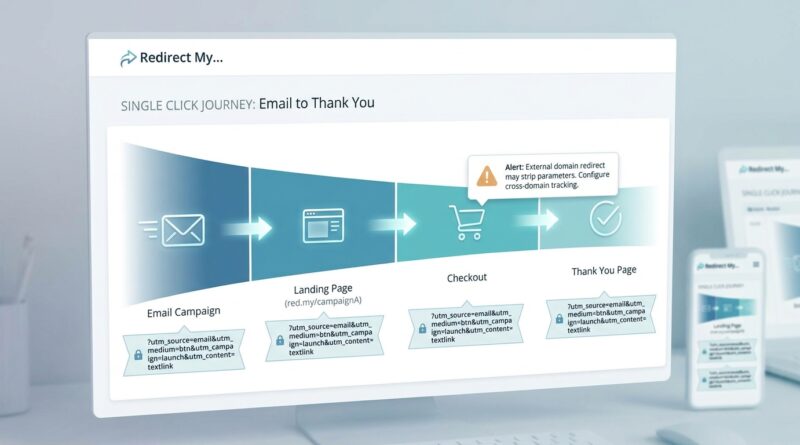
Stop Letting Your Short Links Forget The Journey: How To Build ‘UTM‑Persistent’ URLs That Never Lose Attribution
You did the hard part. You wrote the email, built the ad, created the short link, and got the click. Then the visitor bounced through a redirect, opened your page inside an app browser, clicked to a product page, started checkout, and somewhere along the way your UTM tags vanished. It is maddening. A campaign that really worked suddenly shows up as “direct” traffic, or worse, as some vague referral that tells you nothing useful.
The fix is not glamorous, but it works. You need your short links and landing pages to treat UTMs like luggage tags that stay attached for the whole trip. That means preserving parameters during redirects, storing them on first visit, reusing them on internal links and forms, and testing every handoff before a campaign goes live. If you want the practical version of utm persistence best practices for url shorteners, start here. Keep the original tags intact, pass them forward on purpose, and stop letting attribution disappear just before the finish line.
⚡ In a Hurry? Key Takeaways
- UTM persistence starts at the short link. If the first redirect drops tags, the rest of the journey is already broken.
- Store UTMs on first page load, then pass them into key pages, forms, and checkout so attribution survives multiple clicks.
- Always test with real devices, in-app browsers, and full conversion paths. Reports can look fine while attribution is quietly failing.
Why UTM tags disappear so often
UTMs are just query parameters attached to a URL. They are simple, which is great. They are also easy to lose.
A lot can go wrong between click and conversion. A shortener may not forward every parameter. A landing page may rewrite the URL. A signup flow may send users to a clean URL with no tracking. A checkout platform may start a new session. Some apps open pages in stripped-down browsers that behave differently from Safari or Chrome.
The result is bad reporting. Paid traffic looks direct. Email looks like nothing. Social gets credit for conversions it did not earn. Then teams make budget decisions using broken data.
What “UTM-persistent” really means
A UTM-persistent URL setup keeps the original attribution data available from the first click to the final conversion event.
That usually means four things:
- Your short URL forwards UTMs exactly as received.
- Your site captures UTMs on arrival and stores them for later use.
- Your internal journeys pass or recall those values on important steps.
- Your analytics and CRM read the same values consistently.
Think of it like checking a bag through multiple flights. If every transfer point knows where it is going, it arrives. If one handoff fails, it gets lost in the system.
Start with the short link, because first click matters most
1. Never overwrite incoming UTMs by accident
This is the first rule of utm persistence best practices for url shorteners. If someone clicks a short link containing utm_source=newsletter, do not replace it with a default source like utm_source=redirectmy or some generic campaign value.
Your shortener should either:
- Pass incoming parameters through untouched, or
- Add missing values only when none exist
Overwriting creates fake cleanliness. It looks tidy in a spreadsheet, but it destroys truth.
2. Preserve the full query string during redirects
Every redirect rule should be checked for query-string forwarding. This sounds small. It is not. If your short link sends users to a long destination but leaves the original query parameters behind, attribution ends right there.
Look for settings like:
- Forward query parameters
- Append existing parameters
- Merge destination and incoming query strings
If both the short link and destination URL contain UTMs, define a rule. Most teams should keep the original incoming values and only append other non-conflicting parameters.
3. Keep redirect chains short
One redirect is normal. Three or four is asking for trouble. Every extra hop adds more chances for a browser, script, CDN, or app wrapper to strip something.
Good practice:
- Short link to final landing page, directly when possible
- Avoid jumping from shortener to tracker to campaign page to regional page
- Use server-side redirects rather than messy client-side JavaScript redirects when you can
Capture the UTMs the moment the visitor lands
Use first-touch storage
Once a visitor arrives, grab the UTM values and store them. Usually that means a first-party cookie, local storage, or a session value. The exact method depends on your site and privacy setup, but the idea is the same.
Capture these common fields:
- utm_source
- utm_medium
- utm_campaign
- utm_term
- utm_content
- landing page URL
- timestamp
- referrer, if available
If UTMs are present on page load, save them immediately before anything else has a chance to rewrite the URL.
Decide how to handle first-touch and last-touch
This is where teams get confused. Should a later visit overwrite the original source? Sometimes yes. Sometimes no.
A practical setup is:
- Store first-touch attribution separately
- Store latest-touch attribution separately
- Do not let one replace the other without a clear rule
That way you can answer both questions. What introduced the customer, and what finally converted them?
Make your site carry attribution forward
Pass values to key pages
You do not need to paste UTMs onto every internal link forever. In fact, that can get messy fast. But you do need important pages to know the original attribution.
For example:
- Lead forms
- Demo request pages
- Pricing pages
- Cart and checkout steps
- Account creation flows
You can do this by reading the stored UTM values and injecting them into hidden form fields, analytics events, or checkout metadata.
Use hidden fields in forms
This is one of the most useful fixes. If someone fills out a form two pages after landing, their original UTMs should still be submitted with the lead.
Hidden fields can capture:
- utm_source
- utm_medium
- utm_campaign
- first landing page
- click timestamp
That means your CRM gets attribution even if the final form URL has no query string at all.
Do not forget subdomains
A lot of attribution disappears when users move from www.example.com to shop.example.com or app.example.com. Cookies may not be shared correctly. Analytics sessions may restart. Forms may live on a separate subdomain with no stored data.
Test every subdomain hop. If needed, store UTMs at a domain level that all relevant subdomains can access, while staying within your privacy and security rules.
Standardize your naming, or your reports will still be messy
Persistence is only half the battle. If one campaign uses utm_source=facebook and another uses utm_source=Facebook, you will split data that should be grouped together.
Create a simple tracking convention for everyone on your team:
- Use lowercase only
- Use hyphens or underscores consistently
- Keep source and medium definitions fixed
- Avoid random abbreviations unless everyone agrees on them
Examples:
utm_source=linkedinutm_medium=paid-socialutm_campaign=q2-demo-push
If your shortener supports templates, use them. That reduces human error before links ever go out.
Watch out for the sneaky failure points
In-app browsers
Clicks from Instagram, Facebook, LinkedIn, and some email apps often open inside in-app browsers. These environments can behave differently from normal browsers. Redirect timing, cookie handling, and even JavaScript execution may not match what you expect.
Test links there specifically. Not just on desktop.
Payment and checkout platforms
Many stores lose attribution right before revenue is recorded. The product page knows the source. The checkout system does not. Then sales look direct.
If your checkout is hosted elsewhere, pass UTM values into the cart or order metadata before handoff.
Consent banners and tag managers
Consent tools can delay scripts. Tag managers can fire after page changes. If your UTM capture script loads too late, the original values may already be gone.
Capture first. Then do the rest.
A practical setup you can use
If you want a simple playbook, this is a solid baseline.
- Create short links that forward the full query string.
- Add UTMs only when missing. Do not replace existing values.
- On the landing page, save UTM values immediately in first-party storage.
- Store both first-touch and latest-touch values.
- Push stored values into hidden form fields and checkout metadata.
- Keep naming conventions strict and documented.
- Test the whole path on mobile, desktop, and in-app browsers.
- Verify what arrives in analytics, CRM, and order records.
How to test UTM persistence before launch
This part gets skipped because everyone is busy. It should not be skipped.
Run a click-to-conversion test
Take one test link and walk it all the way through:
- Click the short link
- Land on the page
- Browse to another page
- Fill a form or complete a test purchase
- Check analytics and CRM records
You are looking for continuity. The same campaign values should still be visible where they matter.
Test edge cases
Also test:
- Links with existing UTMs
- Links with no UTMs
- Links opened in email apps
- Links opened in social apps
- Cross-subdomain journeys
- Checkout on a separate platform
If one of those breaks, a real campaign will break too.
What not to do
- Do not rely only on the final page URL for attribution.
- Do not assume your shortener preserves queries by default.
- Do not let multiple tools rewrite source and medium differently.
- Do not wait until campaign reports look weird before investigating.
By the time your dashboard looks suspicious, the spend is already gone.
At a Glance: Comparison
| Feature/Aspect | Details | Verdict |
|---|---|---|
| Short-link redirect behavior | Best setup forwards all incoming query parameters and avoids overwriting existing UTMs. | Essential. If this fails, attribution fails at the first step. |
| On-site UTM storage | First-party storage captures UTMs on arrival and keeps them available for later pages, forms, and checkout. | Strongly recommended. This is what makes persistence real. |
| Testing across real journeys | Includes mobile, in-app browsers, subdomains, and full conversion paths, not just one landing page check. | Non-negotiable. Silent tracking failures are very common. |
Conclusion
UTM tracking feels simple until you realize how many places it can quietly fall apart. That is why this matters right now. Privacy changes, in-app browsers, and aggressive redirects have made attribution more fragile than most teams realize. The good news is you do not need another expensive attribution platform to fix the basics. If your short links preserve query strings, your site stores UTMs on first visit, and your forms and checkout keep passing that data forward, your reports get a lot more honest. For Redirect My users, learning these utm persistence best practices for url shorteners can plug one of the biggest hidden leaks in analytics. When you standardize, persist, and test the full journey, you can finally trust that your channel reports reflect the real path people took to get there.